
Essays & Reviews
-
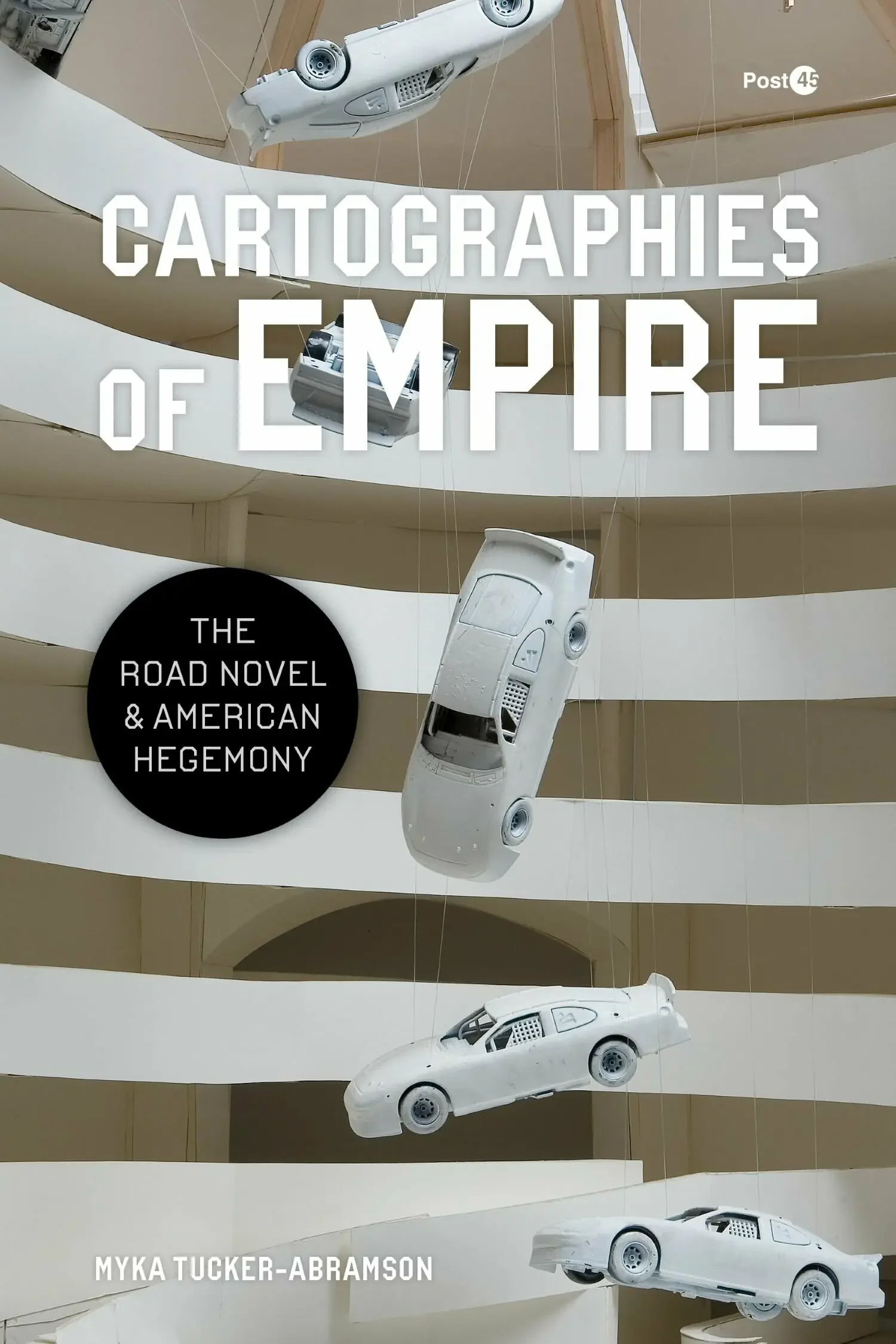
'Book Review: Cartographies of Empire: The Road Novel and American Hegemony.' Postcolonial Text 21.2 (2026).
In Cartographies of Empire, Tucker-Abramson shows how the road novel struggles to break away from material spaces that expose the freedom promised by capital as a lie.
-
'The ten best short novels under 150 pages – chosen by experts.' The Conversation, 1 July 2026.
Denis Johnson’s Train Dreams riffs on the story of the American Dream and transforms it into an ethereal tale of settler colonial conquest, indentured labour, and ecological grief.
-
'Book Review: The City and the World.' Urban History (2026).
The City and the World is a meditation on how the city comes to know itself. Hens compels his reader to ‘experience’ his book as though they were a pedestrian making their way through a twenty-first-century megalopolis.
-
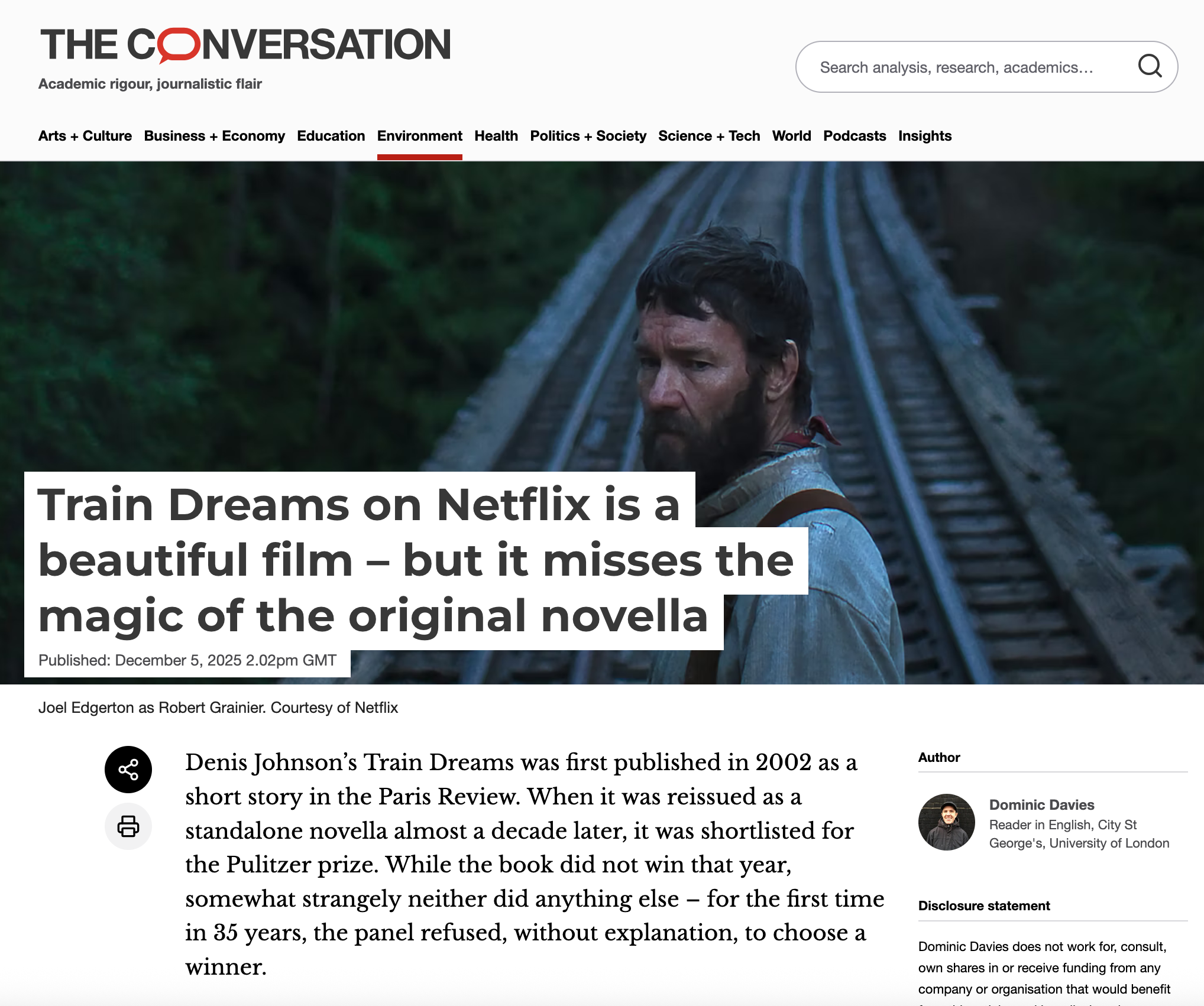
'Train Dreams on Netflix is a beautiful film – but it misses the magic of the original novella.' The Conversation, 5 December 2025.
Train Dreams refuses the reader the comfort of decoupling contemporary climate disasters from the long histories of settler colonialism and racial violence that made the American frontier.
-
'Twenty experts on the book that got them through their 20s.' The Conversation, 1 December 2025.
Drawn in serialised chapters in the early 1990s, in the wake of the first intifada and on the eve of the Oslo accords, Joe Sacco’s Palestine offers a snapshot of history that will open your eyes to the deprivations of the Israeli occupation of Gaza.
-

'Book Review: Tracking Capital: World-Systems, World-Ecology, World-Culture.' Journal of Postcolonial Writing 62.4 (2026), pp.613-614.
All cultural texts are commodities that conceal within them the conditions of their production, even if these are now spatially dispersed along chains that cross multiple locations.
-

'Reclaiming Inheritance Tax as a Social Good.' Red Pepper, 5 September 2025.
If Thatcher’s claim that ‘there’s no such thing as society’ is now reproduced through the infrastructures of everyday life, the other great neoliberal myth – that the free market means more meritocracy – has been left in the dust.
-

'The Decline Rollercoaster.' Tribune, 13 October 2025.
Alton Towers stands as a monument to the neoliberal restructuring of the English Midlands. For all the whooshes and screams of excitement, there’s no such thing as progress in a theme park.
-

'Comics and graphic novels can empower refugees to tell their own stories on their own terms.' The Conversation, 2 July 2025.
Comprised of multiple images arranged into sequences and interspersed with speech bubbles and caption boxes, refugee comics disrupt a media landscape that tends to reduce migrants to either threats or victims.
-

'Three graphic novels that address the history of slavery – and commemorate resistance.' The Conversation, 24 March 2025.
Composing its stories of the past from framed documents, fragmented images and scraps of text, the form of the graphic novel brings forgotten histories to life and allows readers to reflect on how those histories were recovered.
-

'Book Review: Into Our Labours: Work and its Representation in World-Literary Perspective.' Journal of Postcolonial Writing 61.4 (2025), pp.610-611.
Lazarus makes the case for literature’s ability to emulate the physical strain of hard graft as a condition of experience for so many of the world-system’s most disadvantaged.
-

'Paris goes for Olympic gold in levelling up.' This Week, Those Books, 24 July 2024.
Even before the Olympics start on July 26, Paris wins a gold medal for using the Games to kickstart a radical rethink of the city, its suburbs (or banlieues) and urban inequality.
-

'Why Britain's politicians are obsessed with potholes – and why they still can't seem to fix them.' CiTTi: CIty Transport & Traffic Innovation, 19 July 2024.
Election campaigns always seek to give the “feeling” of improved infrastructure, even when meaningful promises on major projects aren’t actually being made.
-

'Why Britain's politicians are obsessed with potholes – and why they still can't seem to fix them.' The Conversation, 26 June 2024.
In the context of a general election campaign, when numbers are thrown around and there is uncertainty about the future, infrastructure offers a feeling of solidity that voters can begin to get on board with.
-
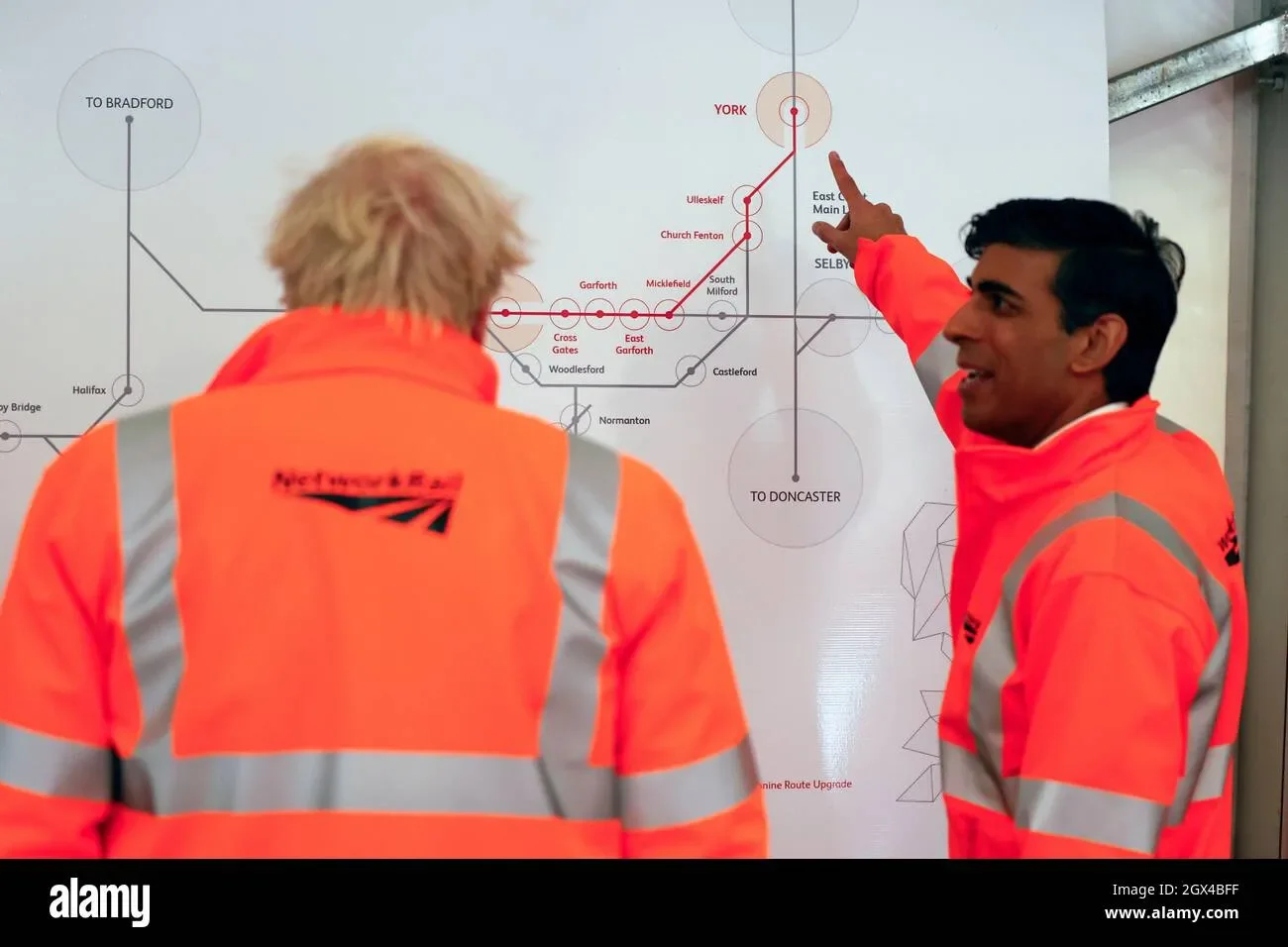
'Levelling Down: How Britain's Infrastructure Fell Victim to The Culture War.' Byline Times Supplement, 17 February 2024.
Why has the Government that won its majority on the promise of renewing Britain’s infrastructure, or ‘levelling up,’ overseen a new phase of infrastructure collapse?
-

'Targeting infrastructure is an assault on Palestinian futures.' Red Pepper, 30 January 2024.
Israel’s attacks on Gaza’s infrastructure are a deliberate effort to make the conditions for life impossible for Palestinians.
-

'How cars and road infrastructure became part of the UK's culture wards.' The Conversation, 26 January 2024.
Wasteful spending and unprecedented levels of privatisation have weakened Britain’s basic infrastructure through disrepair and neglect, lack of reinvestment and accountability, and endemic mismanagement.
-

'Stories shape our world as concretely as infrastructure.' City St George's, 10 January 2024.
Dr Dominic Davies publishes new book The Broken Promise of Infrastructure, which investigates the cultural politics of infrastructure in Britain.
-
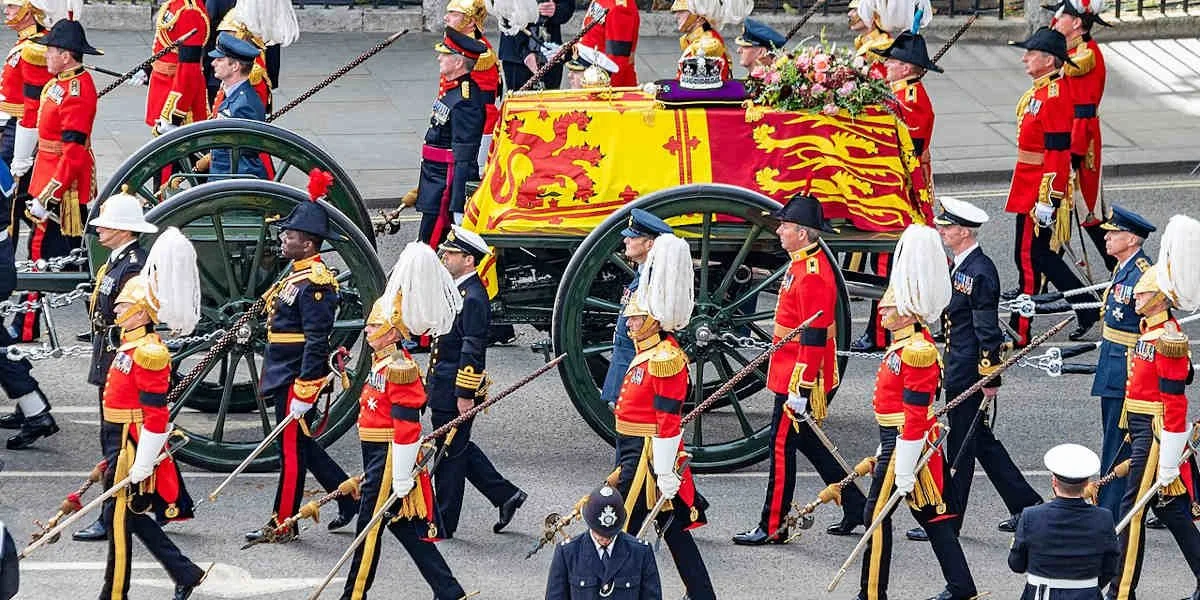
'What the death of Queen Elizabeth II means for the United Kingdom.' Red Pepper, 25 September 2022.
Following the death of Queen Elizabeth II, Dominic Davies analyses what the death of Britain’s longest reigning monarch means for the country.
-

'What is the January 6 insurrection at the US Capitol had succeeded? A grpahic novel is uniquely placed to answer.' The Conversation, 6 January 2023.
Drawing on a rich tradition of comics that depict counterfactual and dystopian futures, this graphic novel breathes visual life into a world in which there was no peaceful transition of power in 2021.
-
‘"Levelling up" is part of the culture war.' Red Pepper, 31 July 2022.
‘Levelling up’ arrived in an illusory infrastructure aesthetic that saw Boris Johnson drive a bulldozer emblazoned with a Union Jack through a polystyrene wall.
-

'Three graphic novels that creatively confront the climate crisis.' The Conversation, 8 December 2022.
Combining image and text, graphic narratives have proved particularly adept at bridging the macro scales of environmental change together with the micro scales of our everyday human lives.
-

'Book Review: Green Unpleasant Land: Creative Responses to Rural England's Colonial Connections.' Journal of Postcolonial Writing 58.2 (2022), pp.286-287.
Revisionist accounts of empire’s reach and effects begin not in history books, but in the literary and poetic writings of authors of colour themselves.
-

'Book Review: Living Cargo: How Black Britain Performs its Past.' Contemporary Literature 59.1 (2018), pp.120-129.
The colonial archive is always already public, as the biopolitical systems that were forged during the transatlantic slave trade recur spatially in the global logics of our neoliberal era.
-
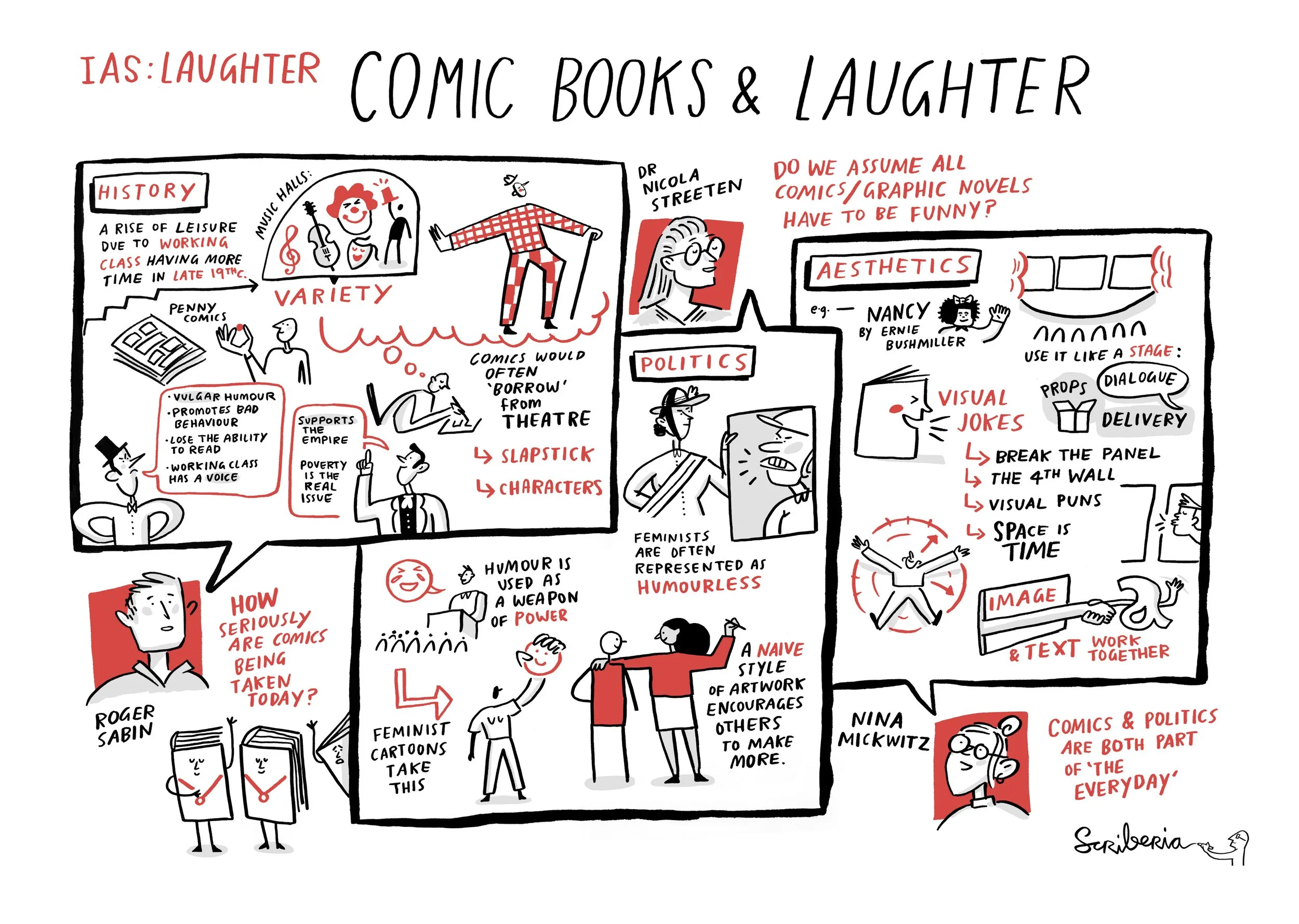
'Graphic Humour: Comics Studies, Literary Studies, and Laughter.' Institute of Advanced Studies (IAS), 7 January 2021.
In April 2019, UCL’s IAS hosted ‘Comic Books and Laughter: History, Politics, Aesthetics’ as part of its seminar series on the relationship between literary studies and laughter.
-
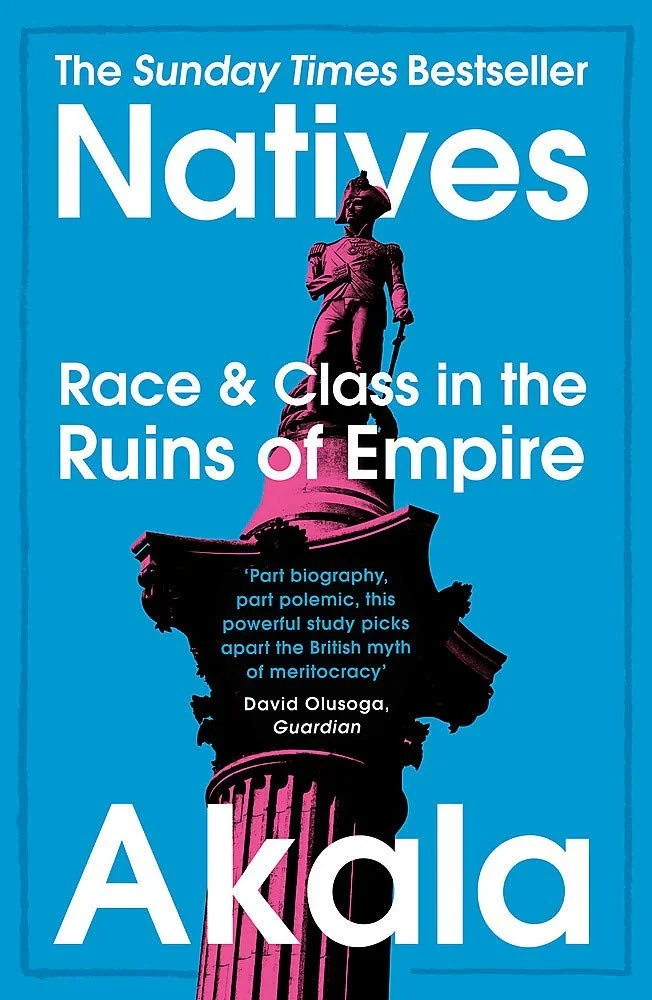
'Akala.' Writers Make Worlds, 2020.
Akala’s autobiography shows readers how centuries of racist policy making from across the Empire continue to impinge on the life of a young black boy in Britain today.
-

'Comics artists and collectives decolonising cities across the global South.' Discover Society, 6 March 2019.
Comics across the global South are engaged in both their form and content with a radical revisioning of violent, neocolonial urban spaces.
-
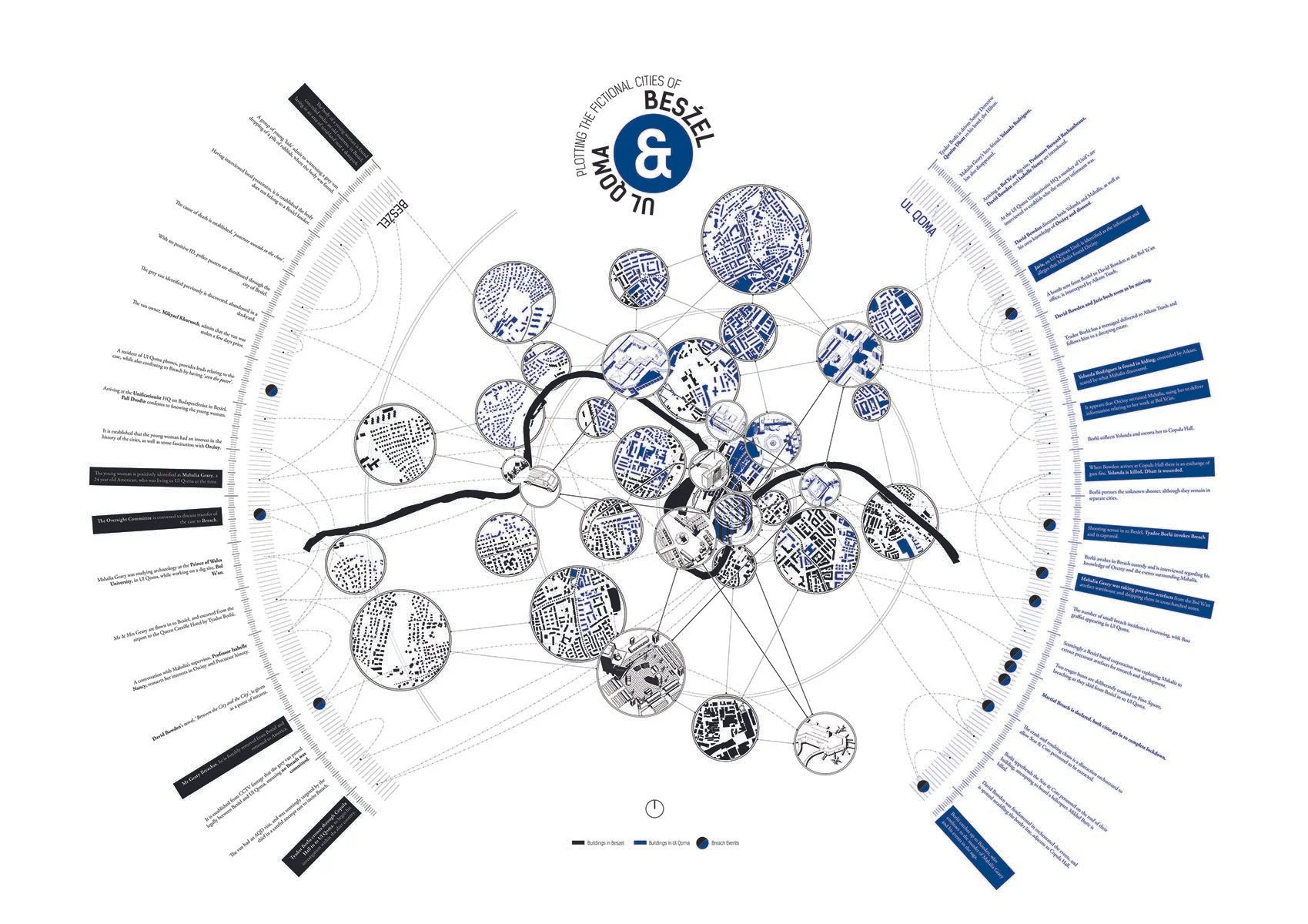
'Speculative Borders: China Miéville’s The City & the City.' Refugee Hosts, 5 April 2019.
Who is it that we choose to see and who is ‘unseen’? How does Miéville’s novel lead us to think and respond differently to the world around us?
-
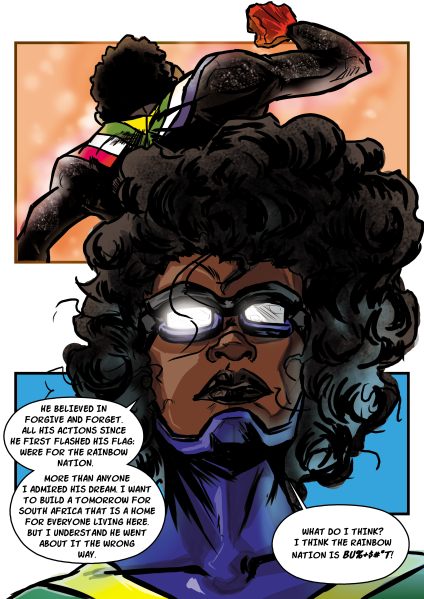
'Genre, Politics, and Southern Superheroes: Review of Bill Masuku’s Captain South Africa.' Africa in Words, 29 October 2018.
Contemporary SA comics are drawn to alternate, speculative worlds, where if politics do surface it is likely to be in the form of allegory rather than overt commentary.
-
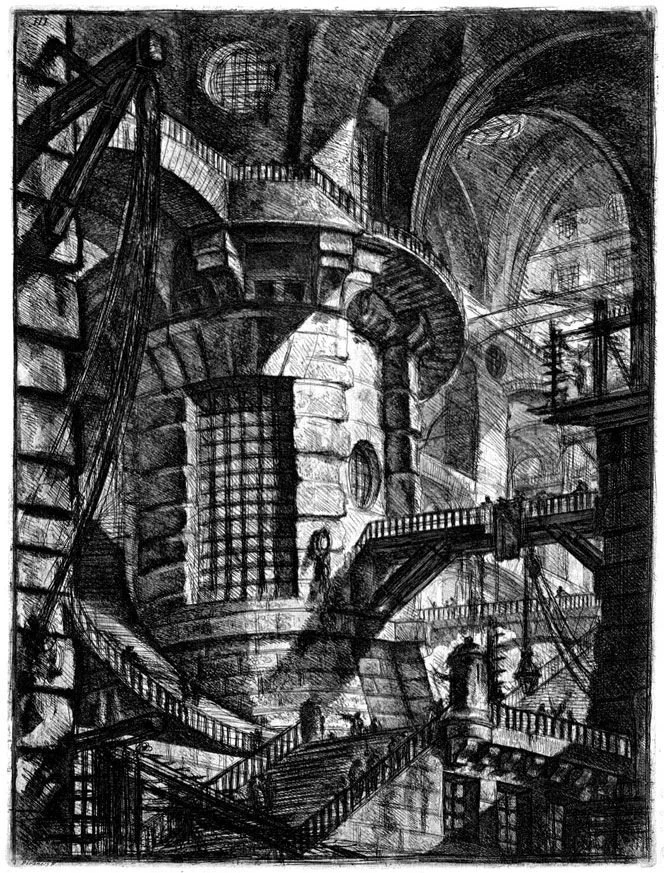
'Hard Infrastructures, Diseased Bodies.' Refugee Hosts, 30 October 2017.
Visual strategies that highlight the infrastructural violence of borders and state responses to refugees, and invite the audience to question their own emotional responses to displacement.
-
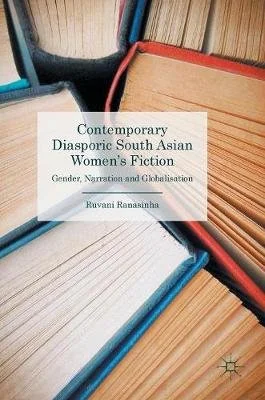
'Book Review: Contemporary Diasporic South Asian Women's Fiction: Gender, Narration, and Globalisation.' Journal of Postcolonial Writing 54.1 (2018), pp.135-136.
An important re-evaluation of South Asian women writers, combining readings of canonical authors such as Arundhati Roy, Monica Ali and Kamila Shamsie with lesser-known figures such as Sorayya Khan and Tahmima Anam.
-

'Movement as a Political Act.' Review 31, 3 February 2017.
Placing citizen’s rights over human rights, borders necessarily deem some people to be ‘more human’ or ‘less human’ than others.
-

'Comics and Graphic Narratives: A Global Cultural Commons.' Words Without Borders, 31 January 2017.
Constructed from borders and gaps of their own, comics are unique in their ability to communicate all kinds of stories across linguistic, cultural, and geographic borders.
-

'Urban Warfare, Resilience, and Resistance.' Refugee Hosts, 21 January 2017.
Baddawi is a biography of Abdelrazaq’s father, Ahmad, who spent his childhood growing up in between the urban spaces of Beirut and Baddawi refugee camp in the 1960s and 70s.
-

'Book Review: Postcolonial Literary Geographies: Out of Place.' Journal of Postcolonial Writing 53.6 (2017), pp.743-744.
For Thieme, postcolonial literature is a form of mappae mundi, medieval maps with artistic idiosyncrasies traceable to a specific author.
-

'Book Review: Theadbare: Clothes, Sex, & Trafficking.' The Comics Grid 7 (2017).
These comics tell a multinational story of the global fashion industry and its varying intersections with the rights of fashion models, factory labour and sex workers.
-

'Being Palestinian: Personal Reflections on Palestinian Identity in the Diaspora.' Journal of Refugee Studies 30.1 (2017), pp.147-149.
A documentation and reminder of the remarkable positions, be they academic, creative, social, or political, that Palestinians in the diaspora have attained.
-

'The Benefit of Hindsight.' Review 31, 14 August 2016.
Cockburn corrects Western media’s obsessive construction of the Middle East as a region of turmoil and savagery that plays so lazily into centuries-old orientalist tropes.
-

'Book Review: What Postcolonial Theory Doesn't Say.' Bulletin of Francophone Postcolonial Studies 7.1 (2016), pp.11-13.
A return to postcolonial theory, with its ability to self-critique so thoroughly, is necessary to recover the politics of resistance that informed the field in the first place.