First Farce, Then Tragedy
I wrote this essay at the beginning of 2025 and one year on, it looks unlikely to find a home. So I post it here before it goes completely passed its sellby date. Enjoy.
‘Hegel observes somewhere that all the great events and characters of world history occur twice, so to speak. He forgot to add: the first time as high tragedy, the second time as low farce.’
– Karl Marx, The Eighteenth Brumaire of Louis Bonaparte
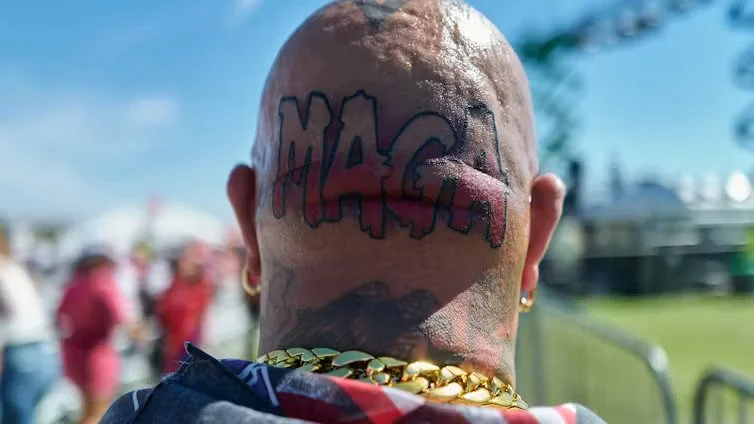
We live in an age of repetitions, this much is indisputable: Make America Great Again. Yet there is nothing that feels particularly farcical about 2025. To point only to Trump’s second term, it seems Marx’s gloss on Hegel’s formulation has now finally been inverted. Where we started with laughable claims about attendance at inaugurations and images of the QAnon Shaman howling in the Capitol, now we have clear political majorities backing fascist billionaires who engage in state capture at home and undermine what is left of democracy overseas. This inversion, farce first, then tragedy, tracks the about-turn of liberal history on its axis, so that we are now – like an upended Benjaminian Angel – finally facing the catastrophes not of the past, but the future.
Readers will likely be familiar with the famous opening lines of The Eighteenth Brumaire. Written in the wake of the failed 1848 revolutions, they begin an essay widely regarded as Marx’s uncharacteristic foray into political commentary. With the hope of the The Communist Manifesto disillusioned, and yet to work out the deeper materialism of his later writings, Marx sought instead to decipher the tectonic movements of world history from its surface tremors. Putting his ear to the ground, he found these in the political rhetoric and cultural repetitions that had flung to power a new authoritarian leader, Louis-Napoleon Bonaparte III.
Almost two centuries later, in our age of ‘polycrises’ and ‘multipolarities,’ the implied stagism of the Brumaire might seem defunct. There are evocative parallels between Bonaparte and Trump, including not least their ability to win working-class support (a point Marx was reluctant to acknowledge in his analysis). But any square confrontation with the collapse of our habitable climate demands a deep historical materialism that looks past the spectacle of performative politics. We must embrace the insights of Earth system scientists and track the geopolitics of semiconductors. It would be foolish to concede a world-historical voluntarism to the extroversion of a few powerful individuals.
And yet, I find myself wondering whether the particular repetitions of our moment might register a shift that diagoses the trajectory of world history in the twenty-first century. To paraphrase the great anti-colonial writer C.L.R. James, Trump didn’t make the revolution, the revolution made Trump. He is a ‘symptom’ in the Marxist sense of that word; a historical materialist energy courses through him and determines his actions. If the Brumaire’s interest in the doubling of history endures as a way of anticipating its bend into the future, there is one repetition in particular that is legible in the permutations of today’s politics. In this essay, I argue this can be effectively apprehended as farce first, then tragedy.
***
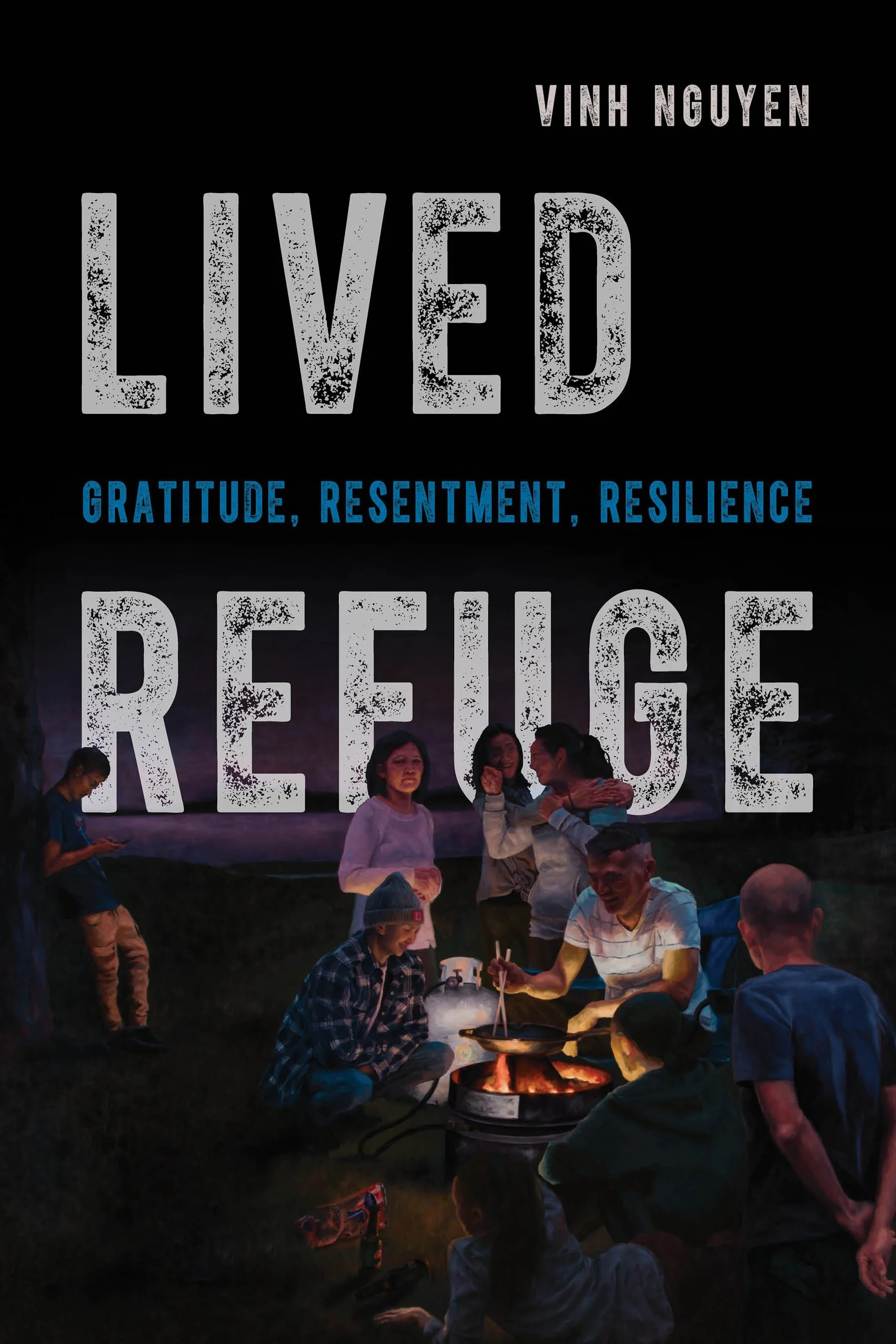
I was first tempted to understand this repetition as a ‘structure of feeling.’ Williams’s phrase tunes us into ascendent belief systems that are not yet locked into institutions or ideologies, but which nonetheless dictate meaningful patterns of behaviour. However, in his remarkable book Lived Refuge, the refugee scholar Vinh Ngyen reminds us that Williams himself once suggested that ‘structure of experience’ might have been a preferable formulation, and it seems to me that this is more suitable for our purposes.
A structure of experience more obviously holds together the dialectic between past and future. The past tense of ‘experience’ is irresolutely concrete; it allows people to make informed predictions and to act decisively in a given context. This contrasts with ‘experience’ in the present tense, which shares its etymology with ‘experiment’ and operates as a verb of trial and error, of taking a chance on partial evidence. A structure of experience therefore brackets the certainty of the past with the open play of the present, offering a more useful heuristic for probing the lived texture of transitional historical moments.
The structure of experience I want to tease out here inverts the sequence of tragedy first, farce second. Dwelling on Marx’s original formulation, Slavoj Žižek returns us to an earlier essay – ‘A Contribution to the Critique of Hegel’s Philosophy of Right’ – where Marx compares the tragic downfall of the French ancien régime in the 1790s with the farcical collapse of the German ancien régime half a century later. The former was tragic because it still believed in itself as a legitimate world order. By contrast, the latter knew its time was up and yet had the temerity to demand the whole world participate in its anachronistic fantasy.
It is easy to read the Hilary Clinton and Kamala Harris campaigns through this original repetition. Clinton truly believed she would fulfil liberal destiny by becoming the first woman president. The literal glass ceiling that was supposed to crash down during her acceptance speech was a farcical stunt, but it betrayed the depth of her conviction. Meanwhile, Brat summer may have been a tragic attempt to draw voters back toward liberalism, but throughout the campaign it was hard to believe that Harris actually believed in anything she way saying. Where Clinton was genuinely sidelined by Trump’s victory, Harris was always already expecting it.
So far the schema of tragedy first, farce second, seems to holds up. Yet in the Brumaire, Marx is not describing the passing of the old regime, but the insurgent rise of a new order, one that assumes the political form of a reinvigorated authoritarianism. He aims his critique at Louis-Napoleon Bonaparte III, who catalysed his surge to power by invoking the strength of his uncle, the great Emperor Napoleon Bonaparte I. Napoleon I was a romantic hero, a figure of great tragedy, Marx argued. His nephew, meanwhile, rhetorically invoked his dynastic legacy in order to conceal his own lack of political substance.
It is when we track forward again to the insurgent Trump presidencies that we see how this structure of experience has now been inverted. Trumpism started out as a movement that didn’t quite believe in itself. The 2016 campaign was not a sustained or coherent political programme, but a project to outrage the liberal establishment and boost stock prices. While these may endure as core motivations of the MAGA movement, the second presidency is marked by a seizable shift in political conviction and historical purpose that follows the arc from farce to tragedy.
More pressingly, the real tragedy of the second Trump presidency is not to be discerned in the self-belief of its leaders, some of whom are probably still playing along to a farcical script. It is rather to be found in the new cultural hegemony that is represented by his expanded electoral coalition. There were a fanatical few who truly believed in the first Trump presidency, and who turned up at the Capitol ready to die for it. Now, however, clear majorities have bought into the solutions Trump is offering; majorities who, to paraphrase Žižek, probably believe in his authoritarianism even more than they realise they do. This is the inversion of Marx’s formula: the first vote was a farcical disruption of the liberal establishment; the second represents a world historic shift that is rooted in people’s lived experience and it is all the more tragic for it.
Some may argue that this view of the Trump presidencies as first farcical and then tragic only appears as such from a liberal perspective. Liberals saw the 2016 victory as an outrageous anomaly, a glitch in the smooth slipstream of history that would eventually wash itself out. In this narrative, the 2024 victory is tragic because it affirms the death of liberalism and its associated promises of universal rights, individual liberty, social mobility, meritocracy, and so on.
But this is refuted by a reading of the Obama and Biden presidencies from a left, anti-liberal perspective. This point of view understands that the promises of liberalism were always already broken; that in fact, as Domenico Losurdo maps in detail, liberalism’s making of promises in one quarter has always been structurally enabled by their breaking elsewhere. Looked at this way, it is Obama who emerges as the farcical figure, preaching a post-racial politics while expanding the US drone programme and overseeing domestic conditions that spurred the rise of Black Lives Matter. Biden, by contrast, fully inhabits the tragic reality of liberalism, evacuating from Afghanistan, refusing to leave office, and openly facilitating the genocide in Gaza. Obama’s ‘yes we can’ chant pales in significance next to Biden’s grim determination.
The tragedy here is not the failure of liberalism, then, but the failure of the left to capitalise on liberalism’s implosion. This is how we can speak of farce first, then tragedy, as a new structure of experience and a rotation in the trajectory of history. The twenty-first century has arrived in the clothing of the new disaster nationalists, as Richard Seymour calls them, comically lashing out at the ancien régime of liberal democracy. But with no other meaningful avenue before it, history begins to repeat itself, and through this repetition amasses the authority of cultural hegemony. Rather than being laughed off stage, the farcical performances of the new authoritarians are slowly accepted, even welcomed, at which point they harden into a tragic turn in the ongoing spiral of historical materialism.
***
We might cross reference this structure of experience with a turn to British politics. Tony Blair enjoyed psychopathic levels of self-assurance; at once a strength and a weakness, his self-belief propelled him to power only to later flip out into tragic delusion. Though modelling his own version of the party on New Labour and recruiting many Blairite advisors, Keir Starmer by contrast notoriously lacks conviction. Dogmatically pursuing power without purpose, his government unravels into farce. This accords with Marx’s original formulation.
The repetition of the two Corbyn elections seems to follow the same pattern. In 2017, Labour was carried forward by a lived social movement that its advocates deeply believed in, and it tragically just missed out on power. By 2019, tens of thousands of grassroots volunteers turned up to campaign for an election they knew they could not win, and which even their own leadership no longer really believed in. Here as in the US, it is neither Corbyn nor Starmer who will bear out our thesis of historical inversion, but Britain’s own far right analogue of insurgent authoritarianism.
Nigel Farage embodies farce first, then tragedy, as a structure of experience. If the UK Independence Party and the Brexit referendum was the original farce, then the rise of Reform as an electoral force is the tragedy that is yet to come. Farage didn’t actually believe that 23 June 2016 was Britain’s ‘Independence Day’; Brexit was a way of raising his personal profile and making money. Ten years on, these are of course still his core motivations, but – like Trump – he is now buoyed by a deeper cultural energy that has made his future premiership seem basically inevitable.
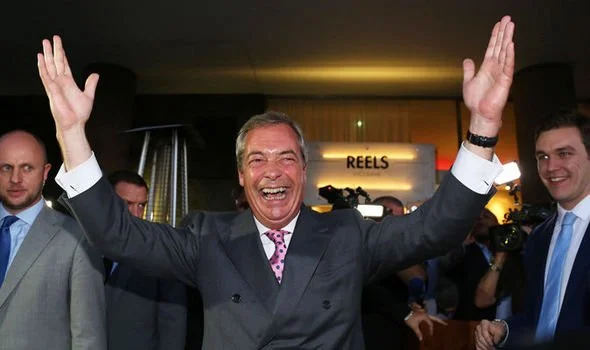
To understand the forthcoming tragedy of Nigel Farage as Britain’s Prime Minister, we must follow this structure of experience as it runs out from the heart-deadening thud of political events into the capillaries of popular culture. It is tempting to see Farage as the farce to Enoch Powell’s tragedy: a man who would have died many times over first for the Empire and later for England’s ethno-nationalist purity, Powell lived his politics deeply and with deranged purpose. Farage is clearly a grifter by comparison.
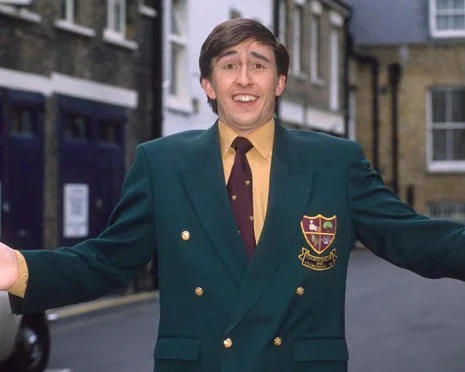
But what if the figure that anticipates Farage isn’t Powell, but Partridge – by which I mean, yes seriously, Alan Partridge, Steve Coogan’s fictional radio host and B-list personality. In his clumsy Englishness and cringing white masculinity, Partridge is the farce before Farage’s tragedy. He articulates perfectly a structure of experience that distrusts friendship or solidarity and harbours a scarcely repressed hatred of migrants, women, students, and trans people. Partridge consolidated this culture of archaic ‘stability’ and turned it into an object of ridicule. We all laughed along at its fuddy anachronism. Yet tragically, this anachronism now returns as a material force, not exiled from history but motoring it forwards. Farage is Alan Partridge finally metamorphosed into the authoritarian personality he always wished he could be.
This example might seem trite, but it bears out a repetition that runs deeply through our culture and is starting to mould history with material predictability. World-historical figures once drew on the tragedy of earlier eras to cloak their own farcical redundancy. Now, as we move into the twenty-first century, the farcical pose of earlier eras returns to us in the posture of tragedy. These actors are angered by their earlier ridicule and they are so determined to be taken seriously that they will take power by any means possible, including at gun point, if necessary.
Of course, the real punchline of the joke is that they don’t have to take power; on the contrary, it is readily given up for them. Once the object of our laughter, the clown now steps forward to act with the kind of conviction that is otherwise so hauntingly absent from our culture and society. It is said that these ‘farcicalisers,’ as Naomi Klein calls them, emerge as ‘an anti-tragic force that inconsequentialises everything.’ I think we are now seeing an about turn in this historical trajectory. Part of the lure of the new authoritarians is their offer to restore the lost romance of tragedy in a world that has forgotten how to believe in anything other than the commodity. While liberal conviction collapses with the failing consumer society that it spent so long building, the right remove their masks of comedy and offer people something they can actually believe in.
***
When The Traitors first appeared on British television screens in late 2022, it immediately presented a crude allegory of neoliberal culture. The show throws together a group of ‘ordinary’ people who must compete to win modest sums of money: tens though not hundreds of thousands of pounds, enough for a deposit in a housing crisis, but barely a sniff for the billionaires running today’s politics. While most contestants are ‘faithfuls,’ an unknown few are designated as ‘traitors,’ a double standard that compels everyone to suspect that everyone else is working selfishly for their own interests. Manufacturing an onscreen culture of fetid self-centredness, the show so accurately models the experience of late capitalism that it attracted unprecedented viewing figures and soon enjoyed spin-offs in the US, Australia, and New Zealand.
There have now been three seasons of The Traitors in the UK and they follow the pattern of farce first, followed by spiralling tragedy. The first season was striking for the way bonds of trust and friendship endured through the programme’s escalating attempts to sow division and paranoia. Despite the best efforts of the producers, participants did not allow their subjectivities to be entirely subsumed by the show’s mercenary individualism. This resilient sociality came to a head in the final, when three ‘faithfuls’ – a comedian, an estate agent, and a call-centre operator – decided to trust one another and share the final prize pot between them.
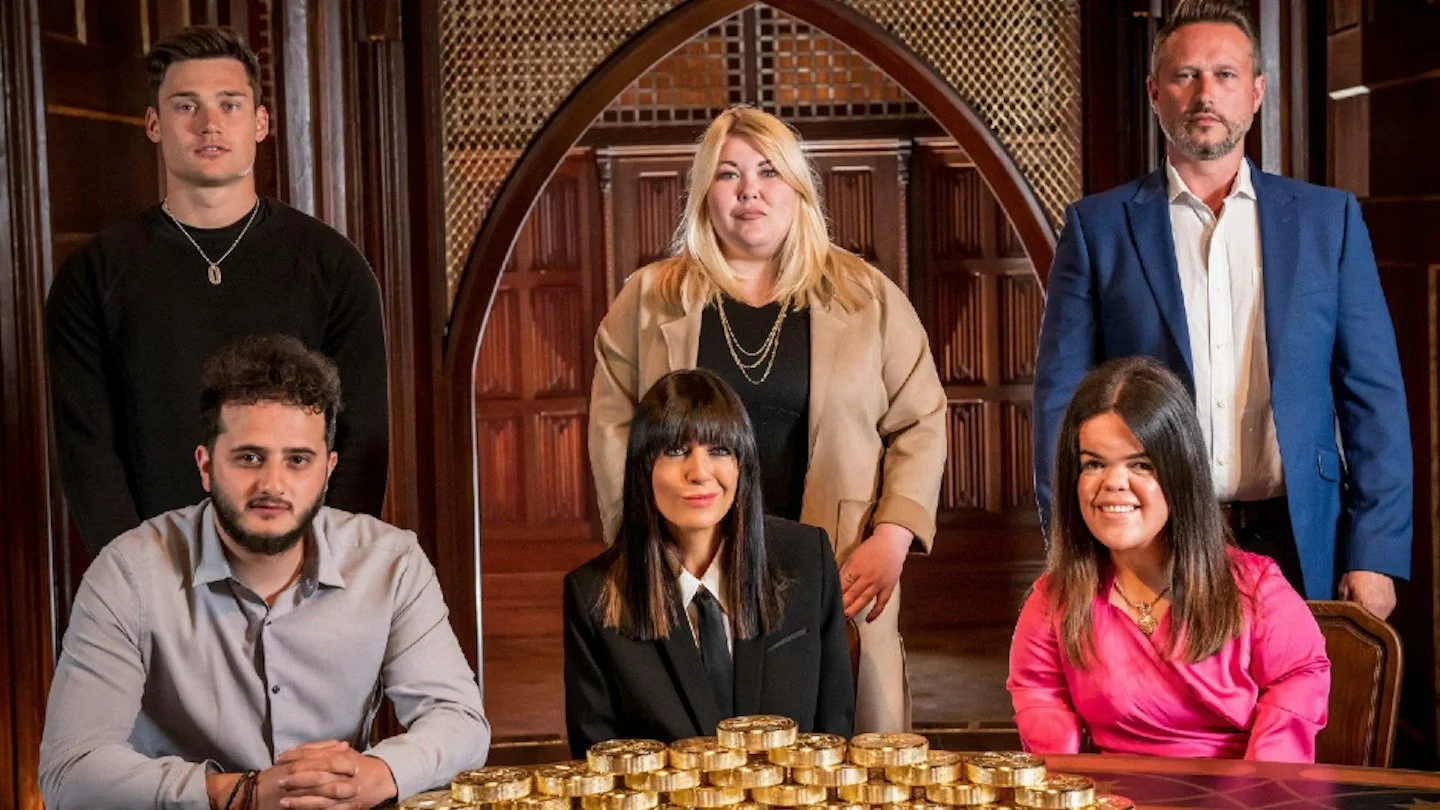
This was an authentic and not an affected solidarity. In the climactic episode, one contestant claimed that he wouldn’t be able to speak to the group after the show if they voted to banish him. Yet ironically, it was this suggestion that the money mattered more than his new friendships that gave him away as a traitor. The show’s neoliberal ideology was revealed as a farce by the very people who should have been most thoroughly inculcated into it. Of course, they played along with the ‘murders’ and ‘banishments’ for a while, but they never actually believed in the game’s doctrine of ruthless competition. Human relationships were formed in excess of the cynical worldview that the game had tried to instil in its participants. In this, there was something of a triumphant jouissance for the socialist viewer.
However, a very different structure of experience emerged in the second and third seasons. Players in these later episodes arrived with an unforgiving determination to win and an associated belief that they would only do so by not bonding with anyone. The camaraderie of the first season gave way to a much darker culture of mistrust, with increasingly tragic conclusions. In season two, a traitor won because one faithful could not bring herself to vote with another, despite all evidence pointing to his innocence. Then, yet more tragically, in season three the last traitor was banished right at the beginning of the final episode. Unmoored from any genuine relationships and drilling down into the show’s culture of suspicion, the faithfuls abandoned the idea of sharing the prize money among multiple contestants and set about picking each other off, one by one.
This may seem another trite example from popular culture, but it is in fact a window onto the structure of experience I’m drawing out in this essay. Contestants started out by seeing the show as a farce, a bit of fun and a chance to make friends, perhaps a way to enjoy fame for a week or two. But in later iterations everyone knows the game they are playing, and they turn up with an unshakeable commitment to its hardline ideology, even though the prize money is not life changing in today’s economy. There is of course still some cognitive dissonance, an agreement that they’re all there to try and win, but with each repetition the game increasingly overdetermines their subjectivity. Contestants spend the whole show trying to prove to others they are faithfuls, but it is increasingly clear that deep down they believe that they are all traitors, regardless of appearances.
The point I’m making here is that farce first, then tragedy, is a structure of experience that now ‘goes all the way down,’ deep into the rituals of common sense and lived culture. Neoliberal myths of hard work and meritocracy have been smashed to pieces, even as their underlying hyper-individualism endures to prevent old models of solidarity from re-emerging. The more it becomes clear that others have cheated their way to wealth and security, the more people begin to believe they too must adopt the imperatives of dishonesty. This is only intensified as the postwar promise of improved life chances gives way to feelings of ubiquitous scarcity. As farce turns to tragedy, the age of self-realisation that powered neoliberalism is replaced by a new melancholic age of brutal self-preservation.
***
This new structure of experience is inextricably fused to the background noise of the climate crisis. As the crackle of catastrophe breeds fears of mass displacement and pervasive insecurity, the cult of self-preservation is projected upwards into the new authoritarian strong man. Democracy is seen as a privilege of the twentieth century that should be quickly dispensed with, sacrificed on the alter of national self-interest. This retreat to emergency governance marks the belated death of the post-1945 order, when fascism was last defeated, and reveals the enduring truth of capitalism as a system of perpetual warfare.
The farce that now repeats as a tragic phase of world history is therefore a twenty-first-century iteration of the tragedy of the commons. The more people recognise that everyone else is playing the game, the more deeply they begin to believe in it, and they more urgently they act (and vote) on the basis of that conviction. The cultural politics of this repetition is not simplistic or stagist, but a structure of experience that threatens to emerge as a material force in the disruption of a habitable Earth system.
Earth system scientists have shown how climate feedback loops accelerate rising temperatures: melting ice caps, deforestation, increasing levels of water vapour in the atmosphere. What we are witnessing here is the emergence of a cultural climate feedback loop that will be equally destructive of the delicate balances in the Earth system. Mike Davis once described the ‘ecology of fear’ that drove the socio-spatial fragmentation of Los Angeles. The same eddies of insecurity now operate at nested scales within and between nation states throughout the world system. The most rudimentary experiences of life under twenty-first-century capitalism tell us that we must go to whatever lengths necessary to preserve the slithers of wealth and security we still enjoy; not only because resources are limited, but because everyone else is doing it as well. This is farce first, then tragedy, as a structure of experience.
Marx made the observation that history repeats itself by comparing two historical moments. But it might be more helpful to view the new repetition of history as a slope rather than two punctuated events. We take the rising temperature – pun intended – of our imploding cultural climate by tracking the repetitions and differences between distinct political periods and figures. Yet these are symptoms of a deeper spiral that moves, unevenly but certainly, towards what the Salvage collective have termed ‘the tragedy of the worker.’ What is the point of fighting for the future if there is no habitable Earth left to inherit?
From promissory notes to debt financing, capitalism has always functioned by making promises about the future. With the shift to farce first, then tragedy, the future that is promised is not one of progress or prosperity, but a near certain apocalypse that we must all set about surviving. From economic investments in fossil and border infrastructures to political investments in the new authoritarianism, the more the world buys into collapse of the Earth system, the more that future appears as inevitable. With this now total inversion of liberal teleology, the Angel of History once described by Walter Benjamin rotates on its axis. Rather than flying backwards into history, it has twisted round to face it head on, confronting the wreckage not of past disasters, but of those that are yet to come.
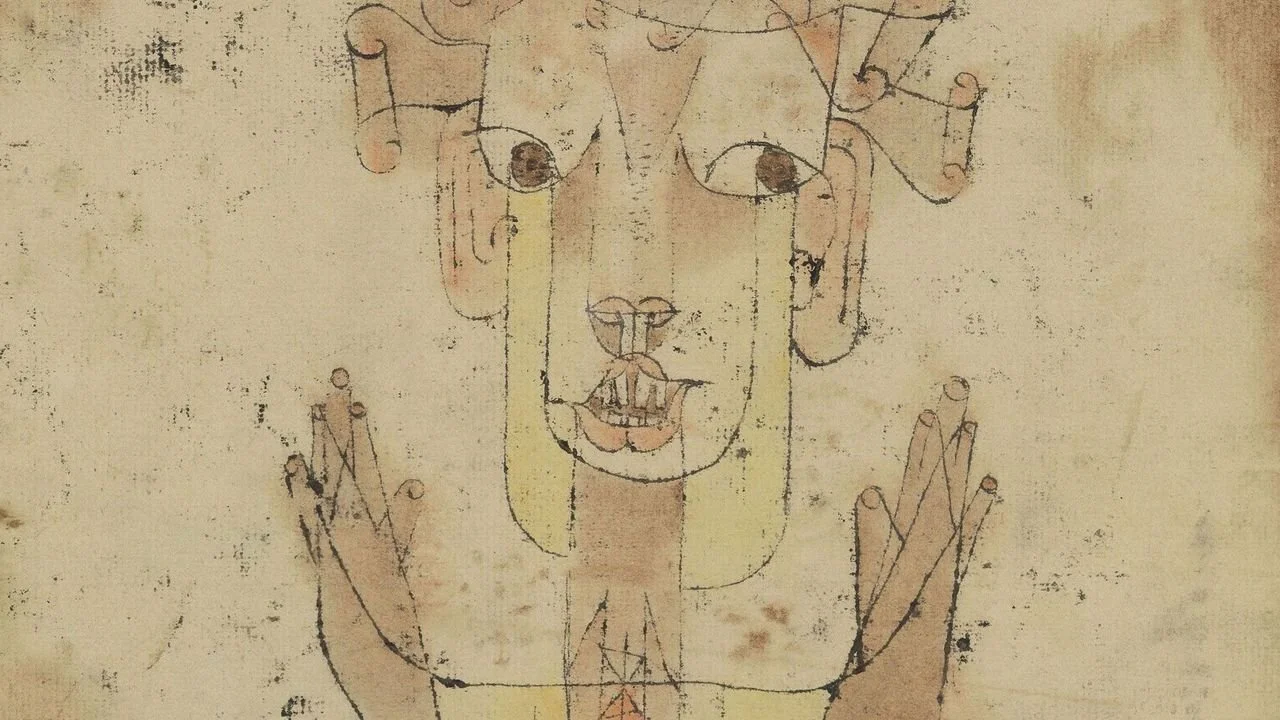
As tragic as these forthcoming repetitions may appear, however, it is perhaps also here that the left might find a semblance of solace and grounds for organisation. To take the hypothesis seriously is to recognise, at last, that we are not blind to the future, that on the contrary, we can see where we are going. The great lesson of dialectical materialism is that you change the future by looking back at the past. Perhaps now that our eyes are open to the road ahead of us, we can look again into history with a clearer sense of what we need to find in it.
In the closing pages of Disaster Nationalism, Richard Seymour invites us to reflect on passion as an historical force. ‘We do need bread and butter,’ he agrees. ‘We even like it. But we don’t love it.’ We love our friends and family, we love our children, we love the strangers we stand next to in a crowd at a concert or protest. The power of farce first, then tragedy, is that it joins these relationships, over which we exercise some agency, to world historical events, over which we exercise very little. To draw out different structures of experience, it is not enough to merely become conscious of history’s repetitions. But it is not a bad place to start.